

Your Questions, Answered
*
Your Questions, Answered *
-
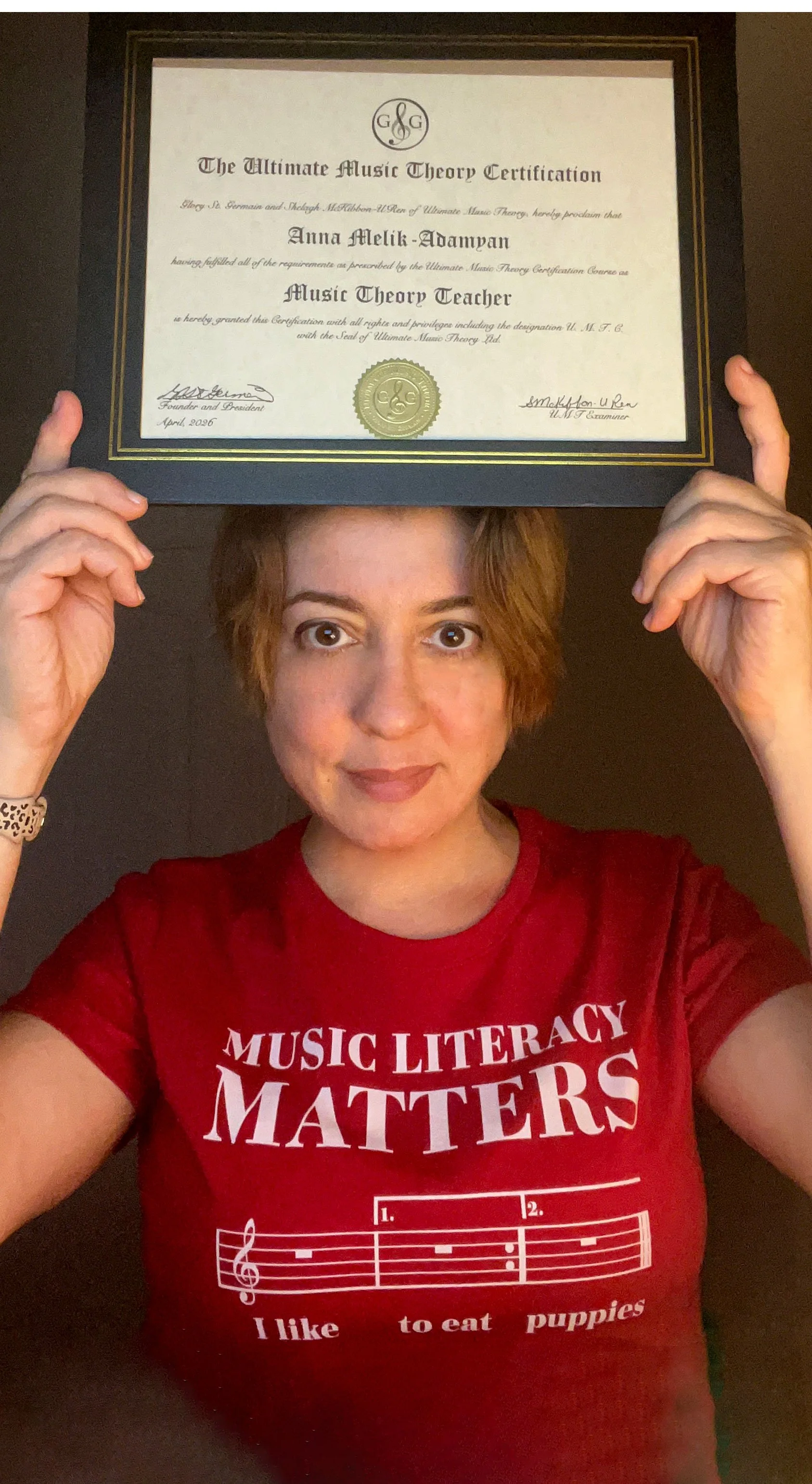
Before the Ultimate Music Theory (UMT) method came into existence (thank you, Glory St. Germain!), music theory was considered by many (even professional musicians) hard, dry, and extremely boring. Now, however, the learning process is full of games, exciting challenges, and “aha!” moments. Hard? Only if you try to learn it blindfolded and with your ears stuffed with cotton candy! Boring? Never! I make theory sing, not snooze.
-
From “I can’t tell a quarter note from a quarter dollar” to “I can analyze a symphony in my sleep,” I have a step-by-step plan to get you there, without the stress!
-
From little humans who just learned to clap on beat, to teens who think they know it all (don’t ask!), to adults who want to finally understand why that one song sounds so good. In short: all ages, from 6 to the early hundreds.
-
Think of the lessons as a musical adventure! Step-by-step learning, games, exciting challenges, and group activities make theory hands-on and memorable. You’ll learn, apply, and even laugh along the way. Practice is key (sorry, kids!), so homework helps turn knowledge into skill. Bonus giggles, if you bring a musical joke to share!
-
Once you decide to start taking classes, I’ll provide you with an Amazon link to make it easy for you to purchase the workbooks and flashcards for your particular level.
-
Yes! UMT sets you up for exams like RCM (Royal Conservatory of Music). You’ll actually understand the material instead of just guessing and praying for a “C.”
-
Group lessons are like musical bootcamp—but fun! Friendly competitions, encouragement, and teamwork make you learn faster and retain maximum information.
-
60 minutes usually does the trick. Weekly lessons keep you growing steadily — like a theory ninja in training! But it’s also fun to participate in theory camps from time to time to have something fun to do during school breaks.
-
A device (PC, Mac or iPad) with a camera and mic, stable internet, and the Zoom app. Also have your workbook (purchase before the first class, see point 5), mechanical pencil, eraser, small transparent ruler, and a highlighter. Let me know if you need any help setting up, so you don’t end up accidentally livestreaming your cat :)
-
1. Book a free 15-minute Zoom callwith me in the first place. If you had all your questions answered during the call and decide to go ahead and sign up for classes…
2. Schedule your first lesson. And to make it even more fun…
3. Ask a friend or two to join you!
I’ll help you dive into music theory, have fun, and maybe even discover a hidden musical superpower.